Retatrutide's Full Phase 3 Data Are Out. Here's What They Do — and Don't — Mean for Canadians
On September 29, 2026, two major journals published detailed Phase 3 results for retatrutide, Eli Lilly's investigational "triple agonist" peptide for obesity and type 2 diabetes. The New England Journal of Medicine reported TRIUMPH-1; The Lancet reported TRIUMPH-2. Both were presented the same week at the European Association for the Study of Diabetes meeting in Milan.
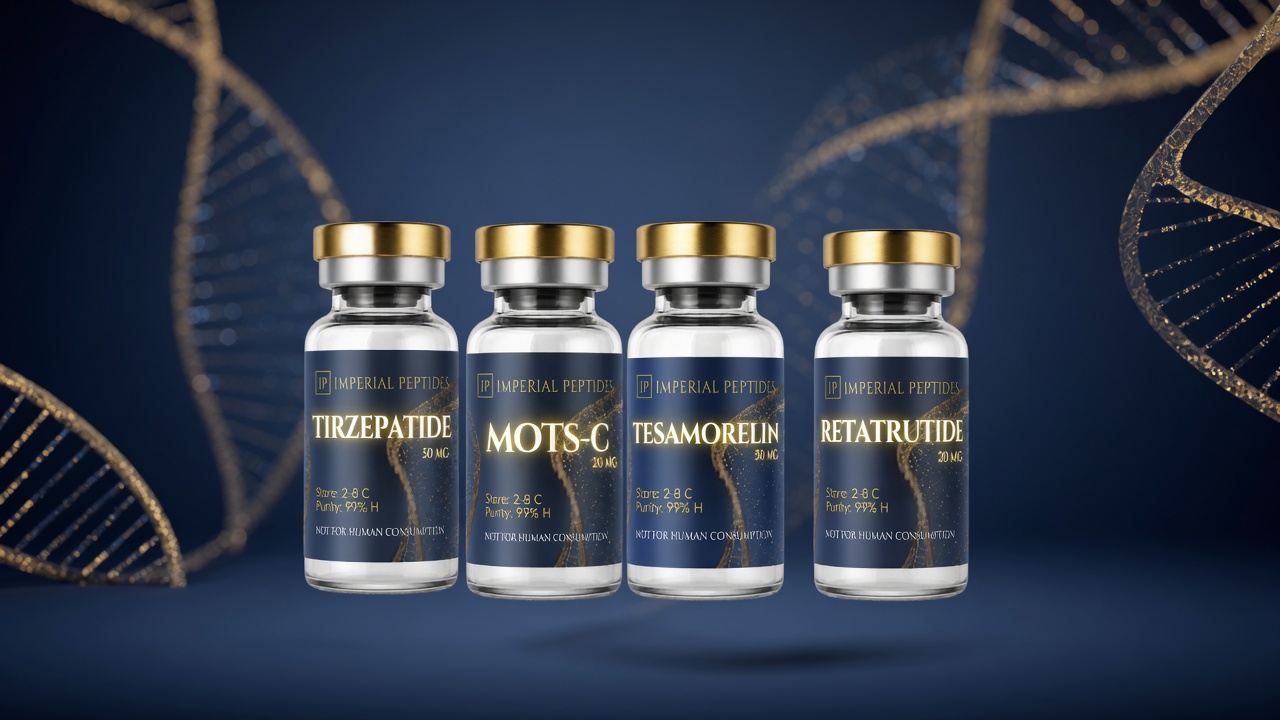
For Canadian readers, the headline is not that a new weight-loss shot is available. It is that large, placebo-controlled human trials are now in print — and that the drug is still not approved anywhere, including Canada. Products sold online under that name are not the trial medicine.
This post summarizes what the peer-reviewed papers and company reports show. It is public information only. It is not medical advice, and it does not suggest that anyone buy, inject, or use retatrutide or any other peptide.
What retatrutide is (in plain language)
Approved medicines such as semaglutide (Ozempic, Wegovy) mainly act on the GLP-1 pathway. Tirzepatide (Mounjaro, Zepbound) acts on GLP-1 and GIP. Retatrutide is a single synthetic peptide designed to activate three receptors: GIP, GLP-1, and glucagon. It is the first drug of that design to finish large Phase 3 obesity trials. The science story is real. Availability is not.
TRIUMPH-1: obesity without diabetes (NEJM)
TRIUMPH-1 enrolled 2,339 adults with obesity (no diabetes) at 131 sites in 11 countries. Participants were randomly assigned to once-weekly retatrutide or placebo for 80 weeks.
In the intention-to-treat analysis summarized from the NEJM report, average weight change at 80 weeks was about −17.6%, −23.7%, and −25.0% on the three active study arms, versus −3.9% on placebo. Earlier company toplines described higher on-treatment figures (up to about 28.3% at the top study arm). Those two ways of counting are related but not identical.
Nested subgroups also improved more on the drug than on placebo: knee pain among participants with osteoarthritis, and breathing-event rates among those with obstructive sleep apnea. Reporting on the NEJM paper noted broader cardiometabolic shifts (blood pressure, triglycerides, LDL cholesterol) and high rates of prediabetes resolution among people who started with that condition. An extension in people with higher starting BMI reached roughly 30% average weight loss by 104 weeks on the top study arm, according to earlier Lilly disclosures now framed by the full publication.
TRIUMPH-2: obesity with type 2 diabetes (The Lancet)
TRIUMPH-2 enrolled 1,152 adults with overweight or obesity and type 2 diabetes at 92 centres in eight countries. At 80 weeks, average weight loss was about 12.7%, 19.1%, and 20.8% across the three active arms (about 30 to 50 pounds at the top arm in Lilly's EASD briefing), versus a much smaller placebo change. Glycated haemoglobin (A1C) fell by about 1.4% to 1.6% on retatrutide versus about 0.2% on placebo. About 35% of people on the highest study arm lost at least 25% of body weight; about half lost at least 20%; nearly 60% no longer met BMI criteria for obesity.
Side effects were mainly gastrointestinal — nausea, diarrhea, constipation, vomiting — similar to other GLP-1–class drugs. Coverage in Fierce Biotech and Scientific American also noted that blood-sugar normalization, while meaningful, looked more modest than some earlier tirzepatide diabetes results. "Strongest weight loss so far" should not be flattened into "best at everything."
What the evidence does and does not show
What it does show (human Phase 3 RCTs, now peer-reviewed): In large, randomized, placebo-controlled trials, retatrutide produced substantial average weight loss and improvements in blood sugar and several obesity-related measures over roughly a year and a half. These are gold-standard trial designs, not animal studies or social-media anecdotes.
What it does not show yet: Approval. Head-to-head superiority over tirzepatide inside the same randomized trial (TRIUMPH-1 had no active comparator). Long-term cardiovascular outcome certainty from these readouts alone. And — critically for Canada — that products labelled "retatrutide" on the internet match the molecule, purity, or sterility of the investigational drug used in Lilly's trials.
Company topline vs. journal publication: Summer 2026 press releases previewed many of these numbers. The September 29 journal articles and EASD presentations are the peer-reviewed step. Figures can still be refined as full papers are digested.
Canadian regulatory fact: On August 17, 2026, Eli Lilly Canada stated that retatrutide has not been approved for human use by Health Canada or any other regulator, and that black-market products under that name are unapproved and illegal. Health Canada's April 2026 advisory on unauthorized injectable peptides also listed retatrutide among seized examples. Authorized Canadian options for related conditions — when appropriate — remain prescription medicines from licensed pharmacies (including approved semaglutide products and 2026 generics). Investigational retatrutide is not in that category.
Lilly plans to submit to the U.S. FDA in the first quarter of 2027, with filings to other agencies expected around then. That is a filing plan, not a Canadian approval date.
Bottom line
This week's publications are a real milestone: a first-in-class triple-hormone peptide with large Phase 3 human data now in NEJM and The Lancet. For Canadians, the practical takeaway is narrower. The evidence is strong and still evolving; the medicine is not approved; and online "retatrutide" is not a substitute for a regulated clinical-trial product or for care from a licensed clinician and pharmacy.
Sources
New England Journal of Medicine (September 29, 2026): Retatrutide for treatment of obesity (TRIUMPH-1)
The Lancet (September 29, 2026): Retatrutide in adults with obesity and type 2 diabetes (TRIUMPH-2)
Ars Technica (September 29, 2026): Most powerful obesity drug yet: People lost up to 25% of weight in trial
Fierce Biotech (September 30, 2026): Lilly sets up next-gen obesity battle with full phase 3 retatrutide data
Scientific American (September 29, 2026): Blockbuster retatrutide trial signals a 'new high-water mark' for weight-loss drugs
Eli Lilly Canada / CNW (August 17, 2026): Public safety notice: unapproved and illegal retatrutide products
Health Canada advisory RA-81874 (April 9, 2026): Think twice before injecting peptides bought online
Eli Lilly investor release (May 21, 2026): TRIUMPH-1 topline (context for earlier figures now peer-reviewed)
Disclaimer: This article is for informational and research-reporting purposes only. It is not medical advice, and it is not an advertisement for any drug or product. Nothing here is a suggestion to buy, possess, prepare, inject, or otherwise use any peptide. Retatrutide is an investigational medicine that is not approved for human use in Canada or elsewhere as of this writing; compounds discussed as investigational or unauthorized are framed as research subjects only and are not for human consumption. In Canada, injectable peptides are generally regulated as prescription drugs and require Health Canada authorization before sale. Always speak with a licensed healthcare professional about authorized medicines available through licensed pharmacies.
Comments