Health Canada Is Cracking Down on "Research" Peptides Sold Online. Here's What That Means
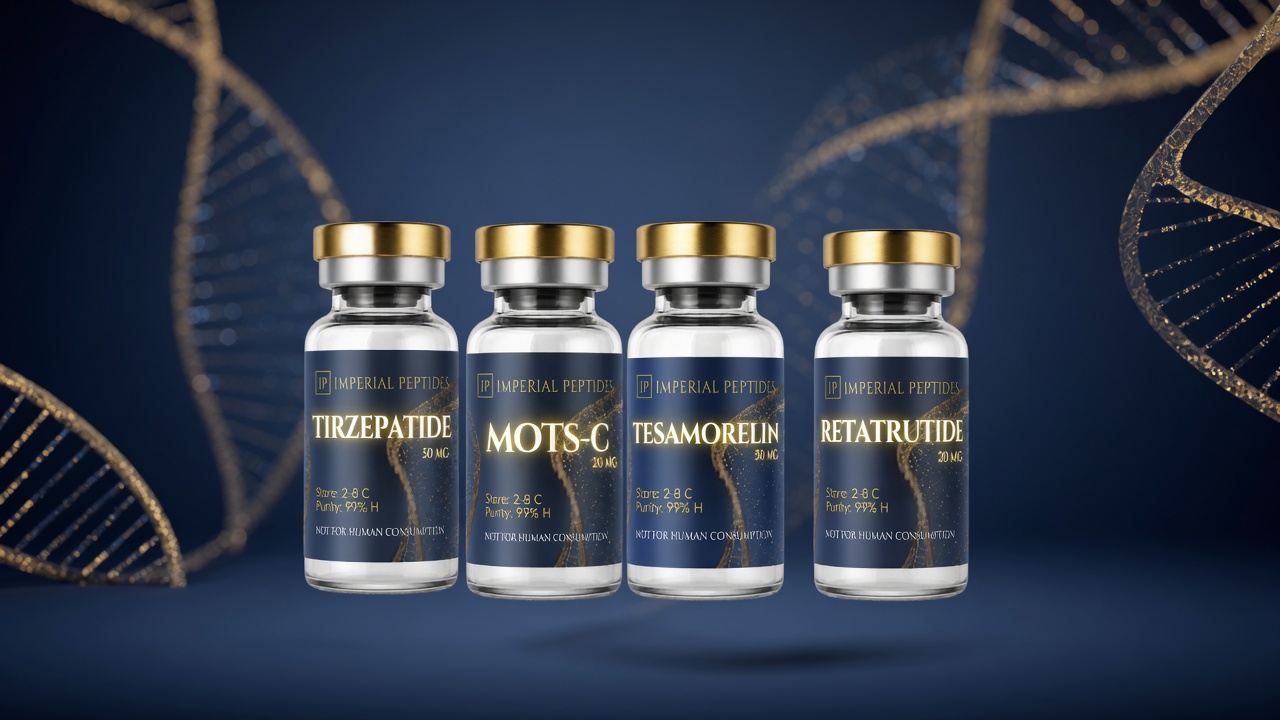
If you've scrolled past ads for injectable "research peptides" promising anti-aging, recovery, or wellness, you're not alone. In 2026, Health Canada has made its position unusually clear: many of those products are unauthorized drugs, a research-use-only label does not make them legal, and buying them online can put people at real risk.
This post explains what Canadian regulators have actually said and done. It is for public information only. It is not medical advice, and it does not suggest that anyone buy, inject, or use any peptide.
What Health Canada warned about
On April 9, 2026, Health Canada issued a public advisory titled "Think twice before injecting peptides bought online." The agency said unauthorized injectable peptide drugs are often marketed for anti-aging, bodybuilding, weight loss, athletic performance, or general wellness. In Canada, peptides are generally regulated as prescription drugs. Authorized ones are assessed by Health Canada and dispensed through licensed pharmacies under medical care.
The advisory listed examples of unauthorized injectables Health Canada had seized, including BPC-157, CJC-1295, DSIP, epitalon, GHK-Cu, HCG, ipamorelin, KPV, melanotan I and II, MOTS-c, NAD+, SS-31, TB-500, and retatrutide. CBC News reported the same warning that day and noted that Health Canada is working with the Canada Border Services Agency to stop unauthorized shipments.
Health Canada's message on labelling was blunt: products marketed as "For Research Use Only – Not for Human Consumption" are not thereby legal or exempt from the rules. That phrase is an editorial and research framing, not a regulatory free pass for products aimed at people.
Why the agency says these products are risky
Unauthorized drugs have not been assessed by Health Canada for safety, efficacy, or quality. The advisory says people using them may face risks that include hormonal imbalance, mood swings, blood sugar problems, liver or kidney damage, blood clots, and growth of cancerous tumours. Products may also contain the wrong amount of drug, none at all, unlisted ingredients, or contaminants such as solvents, heavy metals, particles, bacteria, fungi, or endotoxins.
None of that is a claim about what a carefully studied medicine might do in a clinical trial. It is a warning about products that never went through Canada's authorization process.
Enforcement is not just a press release
Health Canada has followed the advisory with court action. On June 11, 2026, the Superior Court of Québec granted the department a permanent injunction against Québec-based online retailer Canlab Research. Health Canada announced the injunction on July 29. The order bars the company from manufacturing, testing, distributing, or selling unauthorized injectable peptides, and from advertising them through websites or social media reachable from Canadian IP addresses.
In that announcement, Health Canada repeated a core point: in Canada, injectable peptides are regulated as prescription drugs and must be authorized before they can be sold.
That Canadian path is different from the U.S. story that flooded social media in July 2026. An FDA advisory committee narrowly voted to recommend adding six peptides (including BPC-157 and TB-500) to a U.S. compounding bulks list. ABC News reported that the vote was non-binding, FDA staff had opposed every addition, and formal rulemaking would still be required. A U.S. advisory vote is not a Canadian approval, and it is not an FDA approval of those substances as medicines.
What the evidence does and does not show
What regulators have documented: seizures of unauthorized injectables, a public safety advisory, border coordination, and a permanent injunction against at least one Canadian online seller. Those are regulatory facts, not clinical trial results.
What this does not prove: that every named research peptide is useless, or that every future study will fail. Many of these compounds have animal or cell data; some have tiny, uncontrolled human reports. Large, well-controlled human trials are scarce or unfinished for several names that trend online. Lack of Canadian authorization means a product has not met Health Canada's bar for sale as a medicine. It is not the same as a completed negative Phase 3 program.
A useful contrast: some peptide medicines are authorized in Canada. On April 28, 2026, Health Canada authorized the first generic semaglutide in the G7 (a generic of Ozempic for type 2 diabetes) after a formal review. Authorized peptide drugs and unauthorized online injectables are not the same category, even when both get called "peptides" in headlines.
A practical check for Canadian readers
Health Canada advises people to check for an eight-digit Drug Identification Number (DIN) on the label of prescription drugs sold in Canada, and to look products up in Health Canada's Drug Product Database. Decisions about any prescription medicine belong with a licensed healthcare professional and a licensed pharmacy.
Bottom line
Canada's 2026 peptide story is less about miracle recoveries and more about regulation catching up with online marketing. Health Canada has warned the public, named seized products, rejected the idea that a research-use-only sticker legalizes human-directed sales, and won a permanent injunction against a domestic online seller. Social media claims that "the FDA approved" popular research peptides do not change that Canadian picture.
Sources
Health Canada public advisory RA-81874 (April 9, 2026): Think twice before injecting peptides bought online
CBC News (April 9, 2026): Health Canada warns against injecting unauthorized peptide drugs
Health Canada / CNW (July 29, 2026): Permanent injunction against Canlab Research
ABC News (July 24, 2026): FDA advisers narrowly vote to add 6 peptides to a compounding list
Health Canada / CNW (April 28, 2026): First G7 generic semaglutide authorization
Health Canada Drug Product Database: https://www.canada.ca/en/health-canada/services/drugs-health-products/drug-products/drug-product-database.html
Disclaimer: This article is for informational and research-reporting purposes only. It is not medical advice, and it is not an advertisement for any drug or product. Nothing here is a suggestion to buy, possess, prepare, inject, or otherwise use any peptide. In Canada, injectable peptides are generally regulated as prescription drugs and require Health Canada authorization before sale. Compounds discussed as unauthorized or investigational are framed as research subjects only and are not for human consumption. Always speak with a licensed healthcare professional about authorized medicines available through licensed pharmacies.
Comments